Breast Reconstruction in Bellevue
Reconstruction rebuilds the breast after mastectomy. It is the practice's founding discipline: the reconstructive judgment behind every aesthetic operation here started in this work.
The path is planned with your oncology team, on your timeline — immediately at mastectomy, or years later. Both are real options.
Federal law is on your side: the Women's Health and Cancer Rights Act requires insurance that covers mastectomy to cover reconstruction, including surgery on the opposite breast for symmetry. Many patients are unaware of that provision, and this office makes sure you never pay for the gap in awareness.




Your surgeon
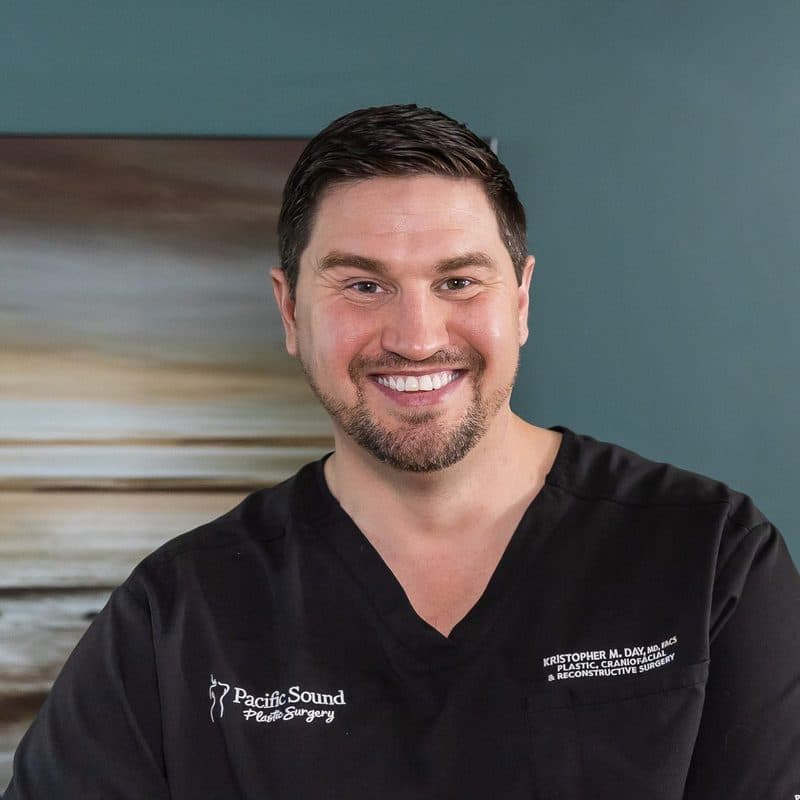
Dr. Kristopher Day is certified by the American Board of Plastic Surgery and the American Board of Surgery, fellowship-trained in craniofacial surgery, and a member of the American Society of Maxillofacial Surgeons.
Meet Dr. DayBreast Reconstruction
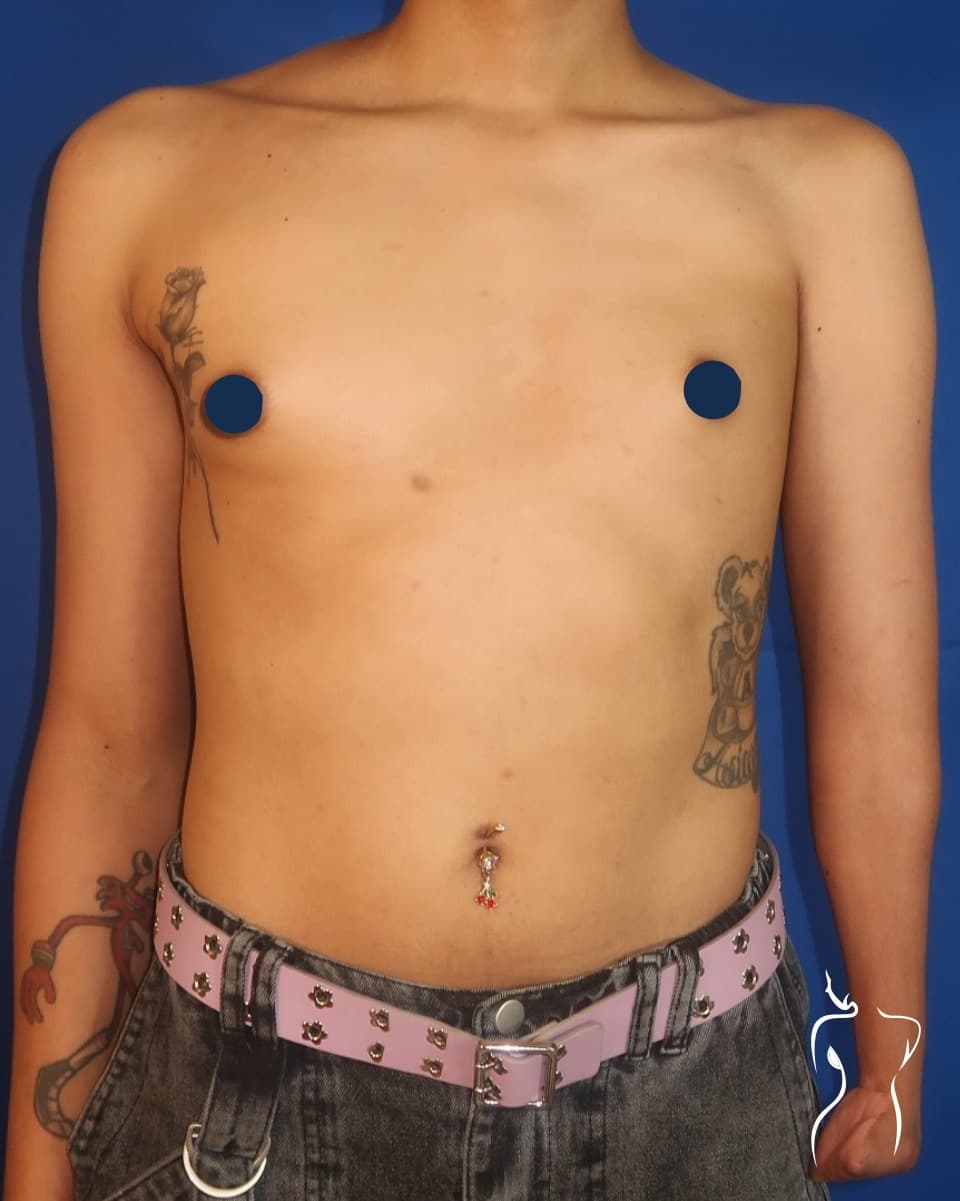
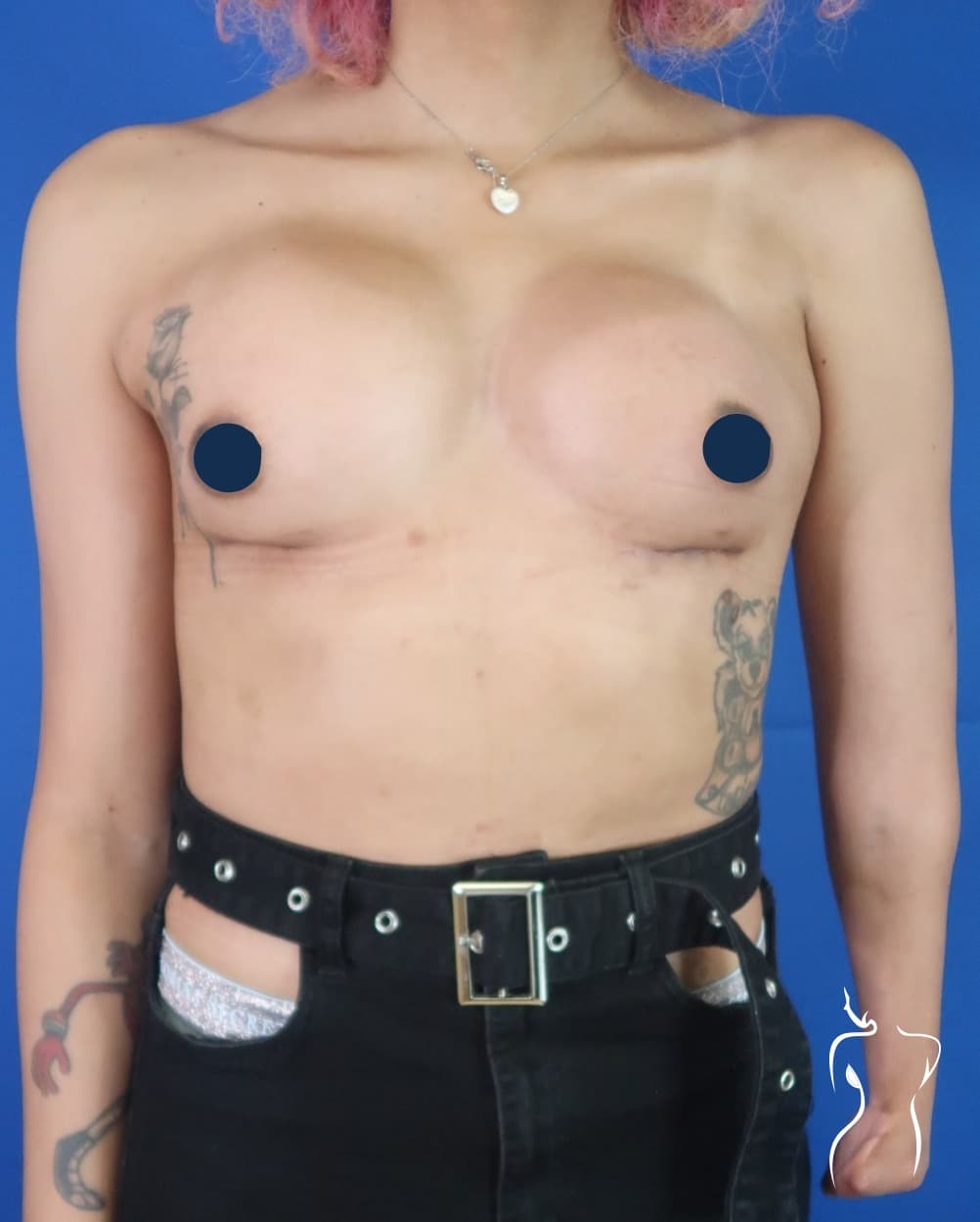
Results vary from person to person. The right comparison starts with your anatomy and your goals, in consultation.
See results like these in person. Plan a consultation with Dr. Day.
The two paths
Every consultation — and every operation — is with Dr. Day.
Implant-based reconstruction is staged: a tissue expander placed at or after mastectomy is gradually filled over office visits, then exchanged for a permanent silicone implant, with refinement, nipple reconstruction, and areola tattooing completing the sequence.
Autologous reconstruction rebuilds the breast from your own tissue — most often from the abdomen (DIEP or TRAM flaps) or the back (latissimus dorsi). It is a longer operation with a result that is entirely your own tissue.
Radiation, body type, and preference drive the choice, and Dr. Day coordinates directly with your oncology team so the reconstruction plan never works against the cancer treatment.
The practical differences, plainly: implant-based reconstruction is the shorter operation with the shorter recovery, staged across several visits as the expander is filled. Reconstruction from your own tissue is one longer operation with a longer recovery, and it tends to age with your body in a way implants do not — which is part of why it is often the better answer after radiation, where implant results are less predictable.
Timing, honestly weighed
Immediate reconstruction begins at the mastectomy itself and spares waking up without a breast. Delayed reconstruction is the right call in some radiation plans and for patients who simply want time to decide.
What usually decides it: whether radiation is part of your treatment plan, whether further cancer treatment comes first, and whether you want the decision made now or later. Delayed reconstruction is frequently the medically better sequence rather than a fallback — and choosing it is not losing anything.
There is no wrong answer, and no expiration on the option: reconstruction years after mastectomy is routinely done and equally covered.
The sequencing is coordinated with your breast surgeon and oncologist rather than around them. Cancer treatment sets the schedule; reconstruction fits itself to that, never the reverse.
Recovery
Each stage has its own recovery, and the exchange surgery is notably easier than the expander placement. Walking starts the day after each operation, desk work resumes in about a week, and full activity returns at four to six weeks.
The expander phase is the part patients most want described honestly: after placement, it is filled gradually over office visits across several weeks, and the tightness after each fill is real but temporary, easing within days as the tissue accommodates. It is a process rather than a single event, and knowing that in advance makes it far easier to live through.
Complete healing across all stages spans a year or more. Follow-up continues throughout, with the same direct access to the clinical team at every stage.
How the weeks before and after surgery fit together is covered in the practice's recovery guide.
Plan a consultation with Dr. Day.
Patient Voices
Individual results vary. Quotes are verbatim excerpts from reviews published by patients.
“He took the time to listen to my concerns and helped set realistic expectations while creating a surgical plan that was exactly right for me.”
Questions, answered
The rest belong in a conversation. Consultations are unhurried by design.
Is reconstruction covered by insurance?
Yes. Under the federal Women's Health and Cancer Rights Act, plans that cover mastectomy must cover reconstruction — including symmetry procedures on the opposite breast, prostheses, and treatment of complications. Benefits are verified before surgery so there are no surprises.
Should I reconstruct immediately or later?
Both are legitimate. Immediate reconstruction spares a second major operation and the experience of a flat chest; delayed reconstruction fits certain radiation plans and gives decision room. Your oncology plan and your preference decide it together.
Implant or my own tissue?
Implant reconstruction is shorter surgery with a staged sequence; flap reconstruction uses your own tissue for a result that ages naturally, at the cost of a longer operation and donor-site recovery. Radiated tissue often favors flaps. The consultation walks both honestly.
Can I have reconstruction years after my mastectomy?
Yes. Delayed reconstruction is routine, medically sound, and covered under the same law, whether your mastectomy was last year or fifteen years ago.
What about the other breast?
Symmetry procedures on the opposite breast — a lift, reduction, or augmentation to match the reconstruction — are part of reconstruction under the WHCRA, and part of the plan here.
Will I have sensation?
Sensation after mastectomy and reconstruction is reduced and varies by technique and healing. Dr. Day discusses realistic expectations for your specific plan rather than a general promise.
How many surgeries will it take?
Implant-based reconstruction typically involves the expander stage, the exchange, and refinement touches such as nipple reconstruction. Flap reconstruction can complete in fewer stages. The sequence is mapped for you at the start.