Thigh Lift in Bellevue
A thigh lift removes the loose inner or outer thigh skin that follows major weight loss — the laxity that causes chafing, complicates clothing, and no amount of leg work resolves.
Thigh skin loses its structural support for a short list of reasons: major weight loss, whether from lifestyle change, bariatric surgery, or GLP-1 weight-loss medications; the collagen and elasticity decline that comes with age; changes after pregnancy; and plain genetics. Once skin has been stretched past its recoil, it rarely comes back on its own.
Liposuction is included in nearly every thigh lift here, debulking first so the excision can shape a smooth, proportionate leg rather than simply a smaller one. It is built into the operation rather than billed as a separate tier.
Thigh lift consultations at this practice are in-person only. Dr. Day does not perform virtual consultations. The operation is planned from how your tissue actually behaves — its laxity, its quality, its response to positioning — and that assessment cannot be made over video.





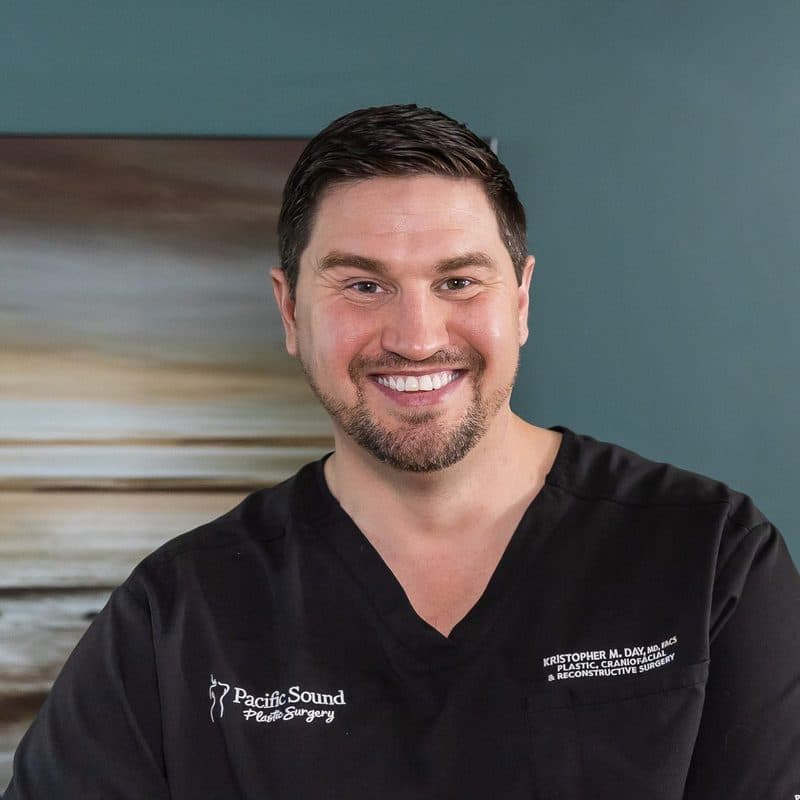
Your surgeon
Dr. Kristopher Day is certified by the American Board of Plastic Surgery and the American Board of Surgery, fellowship-trained in craniofacial surgery, and a member of the American Society of Maxillofacial Surgeons.
Meet Dr. Day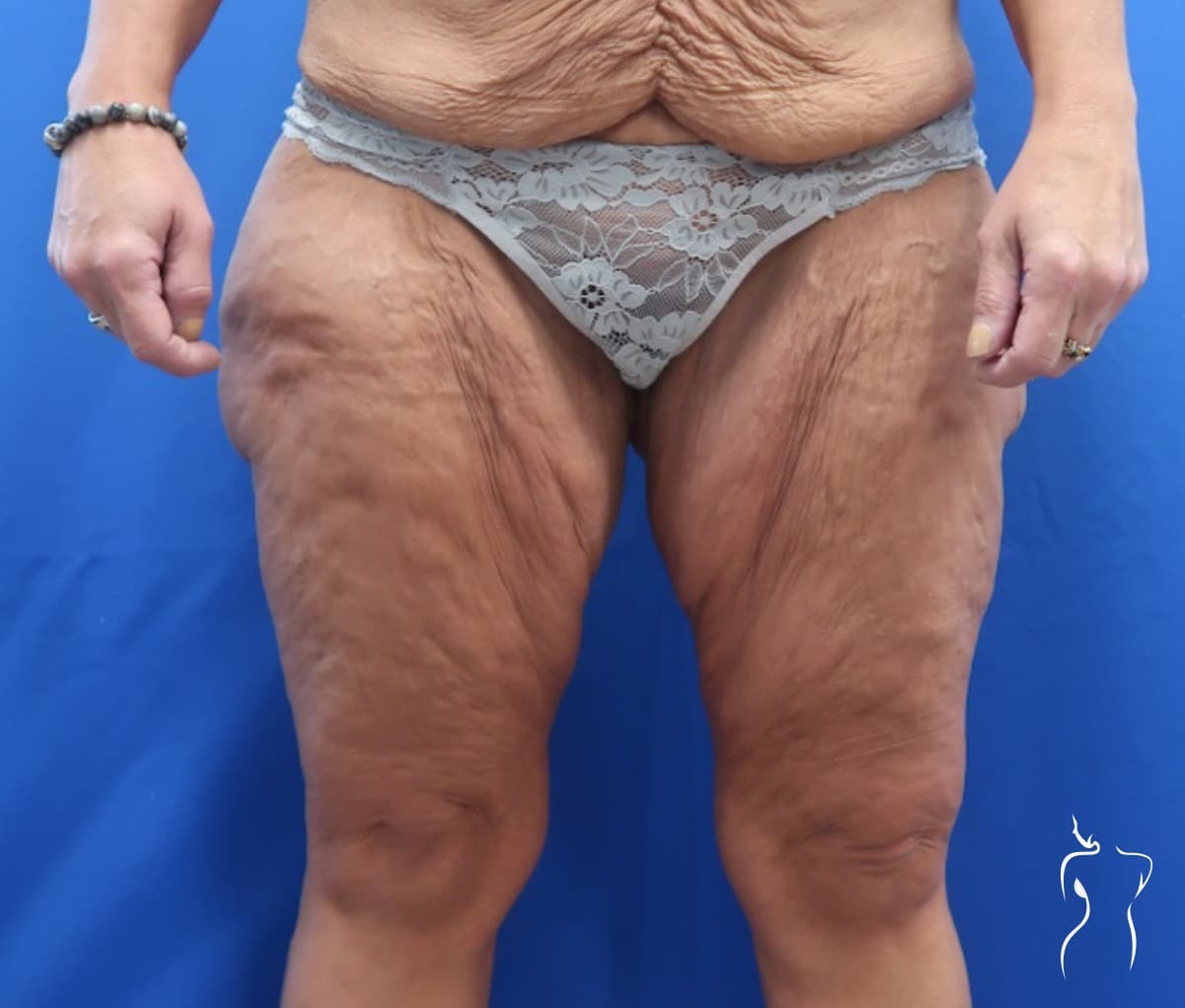
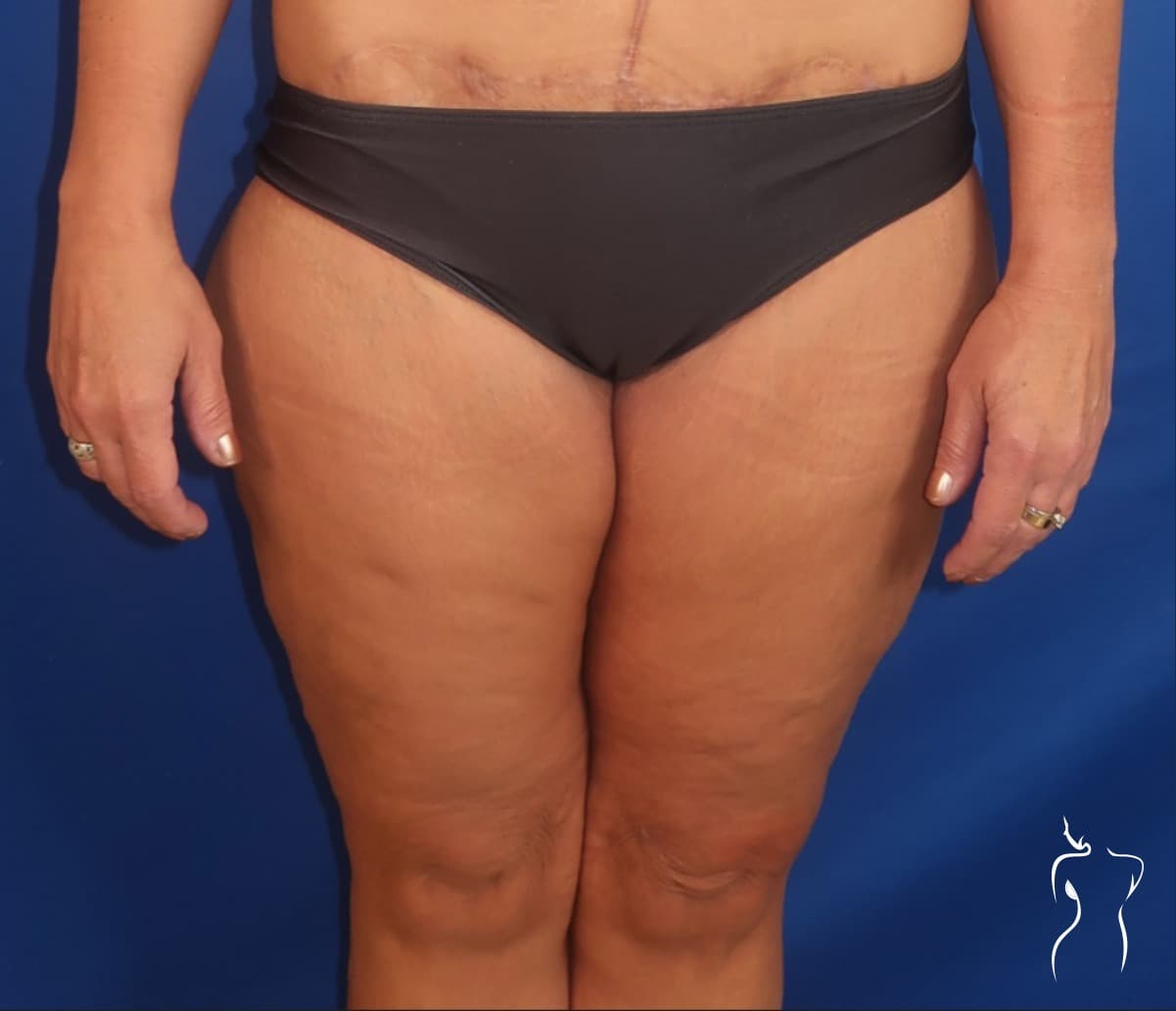
Results vary from person to person. The right comparison starts with your anatomy and your goals, in consultation.
See results like these in person. Plan a consultation with Dr. Day.
The operation
Every consultation — and every operation — is with Dr. Day.
Thighplasty runs two to four hours under general anesthesia, as an outpatient procedure at one of the four accredited facilities Dr. Day operates at. You go home the same day after a period of observation.
For the inner thigh, the incision sits in the groin crease, extending toward the buttock fold as the correction requires; significant vertical laxity can call for an incision along the inner thigh itself. Outer thigh laxity is addressed through an incision that hides at the hip line.
Liposuction debulks first, the excess skin is removed, and the closure is layered so the deeper tissue carries the tension rather than the skin edge — the detail that protects the scar. That detail matters more here than almost anywhere on the body: the inner thigh is mobile, it is warm, and skin edges under tension in that environment are what turns a fine line into a wide one.
Which thigh lift
Where the skin hangs decides the incision. Most plans use one of these; some combine two.
Inner (medial), crease only
The incision stays in the groin crease, extending toward the buttock fold as far as the laxity requires. The scar hides under underwear and swimwear.
Inner, with a vertical component
When loose skin runs down the leg rather than gathering at the top, a vertical inner-thigh incision is added. It buys correction the crease incision cannot reach, at the cost of a longer scar — a trade discussed openly before it is planned.
Outer (lateral)
Laxity across the outer thigh and hip is lifted through an incision placed at the hip line. It often belongs to a lower body lift rather than a standalone operation.
Liposuction alone
Not a thigh lift at all, and sometimes the right answer: fat in skin that still has recoil does not need an excision. The exam is what separates this case from the others.
Is it right for you
Good candidates have loose thigh skin after major weight loss or with age, at a weight stable for about six months, and in good health. Non-smokers, or willing to stop well in advance — nicotine stops four weeks before surgery and stays stopped four weeks after.
When the concern is fat with reasonable skin tone, liposuction alone may serve; when skin has stretched past recovering, excision is the honest answer. The in-person exam settles which you are.
The limitation worth stating before you decide: a thigh lift changes the skin envelope, not the underlying build of the leg. It will not make a muscular thigh slim, and it will not correct proportion that was always yours. What it corrects is redundancy — skin that hangs, folds, and rubs.
Anyone still losing weight is asked to wait. Continued loss after surgery creates new laxity in skin that has just been tailored to a size you are leaving.
Recovery
Plan for a driver home and a caregiver for the first twenty-four to forty-eight hours. Narcotic pain medication rules out driving, so arrange the first several days accordingly.
The first one to two weeks follow the practice's plain-language rule: no grimace, grunt, strain, or sweat. If an activity — including picking up a child — does not provoke any of those, it is allowed. A compression garment follows the 23-and-3 rule: around the clock for at least three weeks, removed only to shower and wash it, and encouraged to three months for the best contour.
Desk work resumes in about a week; physically demanding jobs take three to four. Light exercise returns in weeks two to four at roughly half effort, building progressively, with full unrestricted activity at four to six weeks.
Swelling that settles into the lower legs and ankles for the first weeks is expected rather than alarming — the thigh's normal drainage routes are temporarily disrupted, and elevation plus the garment is what moves it. Most of the result is visible by months two and three, with scars continuing to mature over twelve to eighteen.
How the weeks before and after surgery fit together is covered in the practice's recovery guide.
Plan a consultation with Dr. Day.
Patient Voices
Individual results vary. Quotes are verbatim excerpts from reviews published by patients.
“For example, after my thigh lift I had a couple questions. He texted me back right away and ensured all my concerns were addressed.”
Questions, answered
The rest belong in a conversation. Consultations are unhurried by design.
Where are the scars?
For the inner thigh, in the groin crease — hidden by underwear and swimwear — extending only as far as your laxity requires. More significant corrections add a vertical inner-thigh component, placed where the legs shadow it. Dr. Day shows you the planned placement at consultation.
Thigh lift or liposuction?
Liposuction removes fat from skin that can still contract; a thigh lift removes skin that cannot. After major weight loss the honest answer is usually the lift, with liposuction built in.
Why are thigh lift consultations in-person only?
Because the operation is planned from how your tissue behaves under examination — laxity, quality, and how it redrapes. Dr. Day does not perform virtual consultations for surgery; a plan made without an in-person exam would be a guess.
What does 'no grimace, grunt, strain, or sweat' mean in practice?
It is the practice's rule for the first one to two weeks, and it is deliberately not a list of banned activities. If doing something makes you grimace, grunt, strain, or sweat, it is too much for now. If it does not, go ahead. Patients find it easier to follow than a chart of permissions.
Will I need help at home?
Yes, for the first day or two. You need someone to drive you home and stay with you, and moving around is genuinely awkward at first because the repair sits where your legs meet. Most patients are self-sufficient well before the end of the first week.
Why is liposuction almost always part of it?
Because removing skin from a thigh that is still carrying volume produces a smaller leg rather than a better-shaped one. Debulking first lets the excision shape the contour. It is included in nearly all thigh lifts here rather than priced as an add-on tier.
How much does a thigh lift cost in Bellevue?
Thighplasty at Pacific Sound Plastic Surgery starts from $9,000, with liposuction included in nearly all cases rather than billed as a separate tier. Operating-room time is the largest factor in the total. Your consultation includes a written breakdown, with CareCredit and Alphaeon financing available.
Financing OptionsDoes insurance cover a thigh lift?
Cosmetic contouring is not covered. Where hanging skin has caused documented medical problems such as recurring rashes or wounds in the fold, part of an excisional procedure can qualify for review, and the office will give you a straight answer about your own case rather than an encouraging one.
Can it be combined with other procedures?
Yes — thigh lifts commonly join lower body lifts, arm lifts, and breast surgery in staged post-weight-loss plans. Whether they happen together or in stages depends on your health and safe limits on total operating time; the sequencing is mapped at consultation.
How long do results last?
The removed skin does not come back. With stable weight the contour lasts, aging normally from its new baseline. Significant weight gain, or further weight loss after surgery, is what changes it.