Non-Surgical Rhinoplasty in Bellevue
Non-surgical rhinoplasty uses precisely placed filler to camouflage a dorsal bump, smooth an irregularity, or lift a drooping tip — a fifteen-minute change to the profile, reversible and without downtime.
It is performed here by a surgeon who also performs surgical rhinoplasty, which matters twice: once for the aesthetic judgment, and once because the nose's blood supply makes it the highest-stakes filler territory on the face.
The honest scope: filler adds, it never subtracts. It cannot make a nose smaller, narrow nostrils, or improve breathing.



Your surgeon
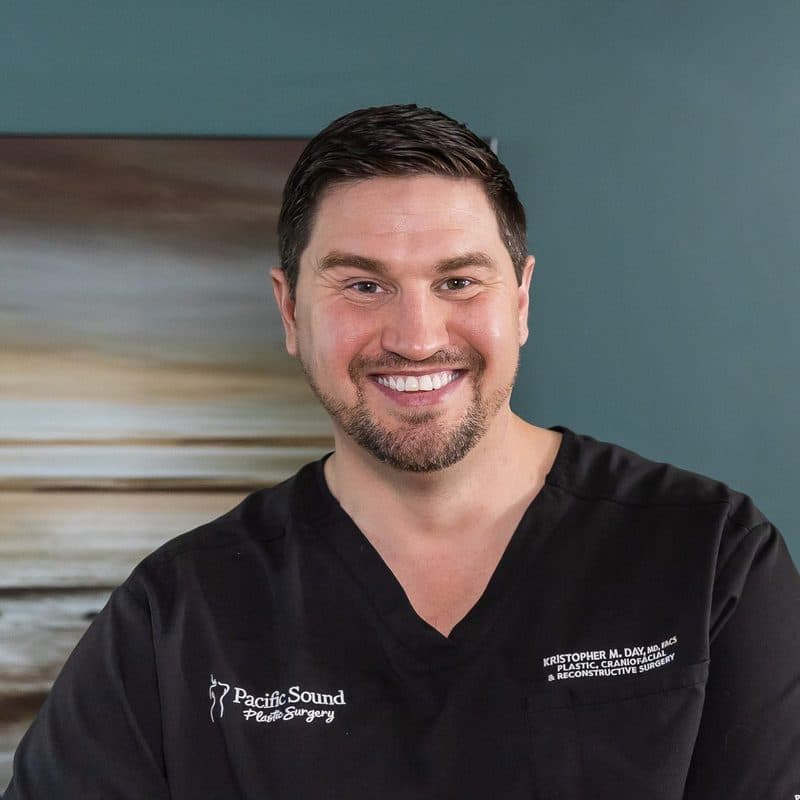
Dr. Kristopher Day is certified by the American Board of Plastic Surgery and the American Board of Surgery, fellowship-trained in craniofacial surgery, and a member of the American Society of Maxillofacial Surgeons.
Meet Dr. DayResults
View the Full GalleryNon-Surgical Rhinoplasty
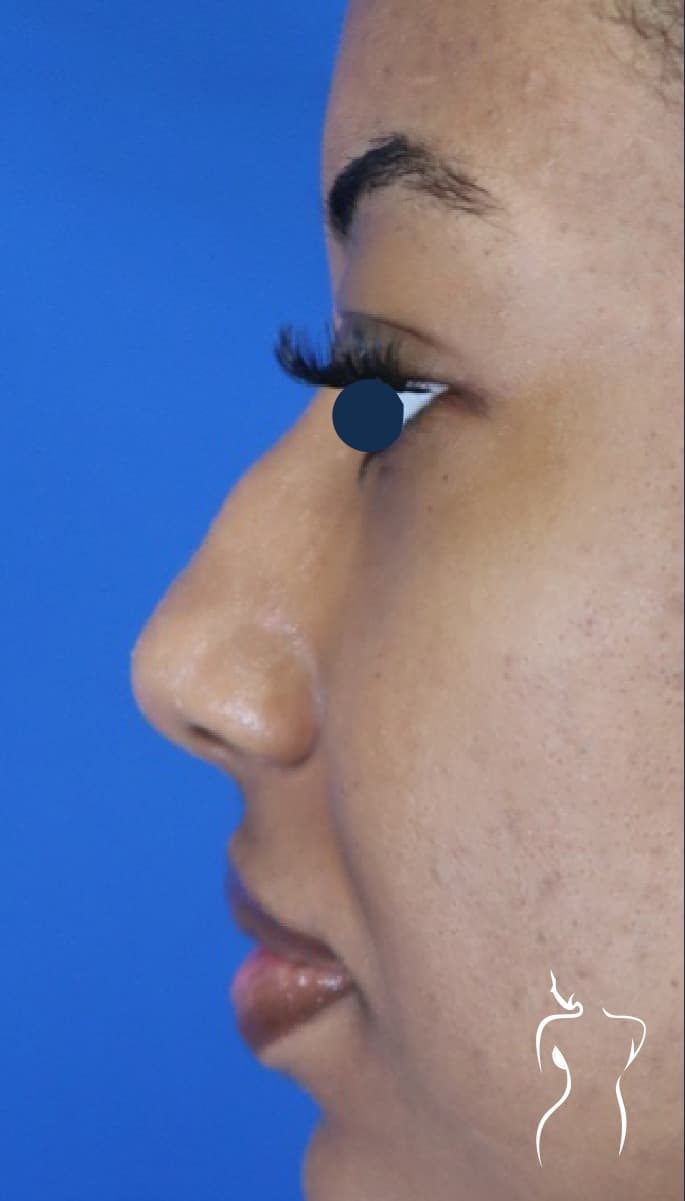
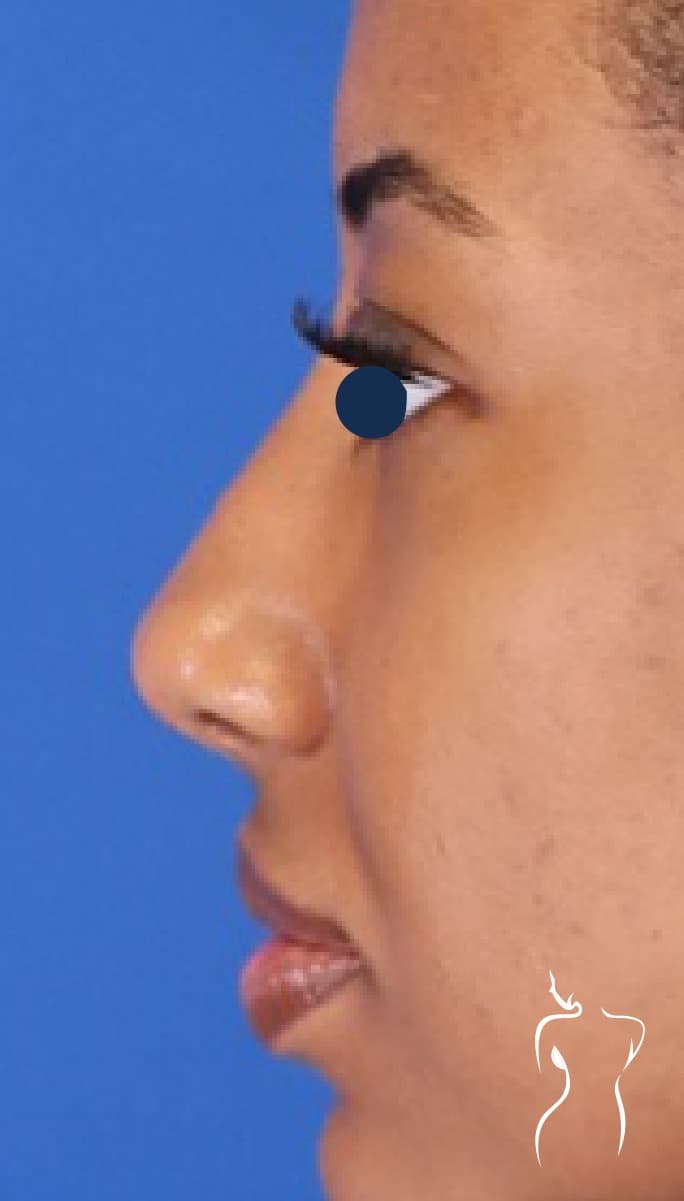
Results vary from person to person. The right comparison starts with your anatomy and your goals, in consultation.
The treatment
Non-surgical care in a plastic surgeon's practice.
Topical numbing cream is applied first, and the filler itself carries lidocaine. Most patients describe a mild pinch and pressure rather than pain.
Hyaluronic-acid filler — Juvederm or Restylane, chosen by the correction — is placed by needle or cannula in small, deliberate amounts. Filling above and below a bump straightens the line of the profile; structured support lifts the tip.
The counterintuitive part is that adding filler can make a nose read as smaller. Straightening the profile line removes the shadow a bump casts, and the eye reads a smoother, more refined shape. The nose has not been reduced; it has been re-lit. That is an honest description of the effect and the reason expectations need setting precisely.
The safety conversation is had plainly: the nose's vascular anatomy means poorly placed filler can compromise blood supply, with consequences that include skin necrosis and, rarely, vision complications. Those risks are managed by injector knowledge, and choosing someone who operates on this anatomy is the single strongest safeguard available.
What filler can correct
Every item here works by adding. Nothing on this page removes tissue.
Dorsal bump
Filling above and below the bump brings the profile into a straight line, so the bump stops casting a shadow.
Drooping tip
Structured support under the tip lifts and rotates it modestly.
Asymmetry
Small deposits balance a nose that reads crooked from the front, within the limits of what filling can even out.
Definition
Subtle refinement of the bridge line where the nose reads flat or undefined.
A preview of surgery
A year spent living with the straightened profile before committing to an operation, dissolvable at any point.
Is it right for you
Good candidates want a straighter-looking profile, a smoothed irregularity, or modest tip lift — camouflage corrections, which filler does beautifully. It also serves as a reversible preview for patients considering surgical rhinoplasty.
If your goal is a smaller nose, narrower nostrils, or better breathing, surgery is the honest answer, and the surgeon you are consulting performs it. A deviated septum is a structural problem, and no amount of filler moves it.
What to expect
Minimal downtime: some redness and mild swelling for a day or two, with makeup fine the next day. Avoid glasses resting on treated areas and strenuous exercise for the first day or two.
The result is immediate, refines within two weeks, and lasts nine to twelve months. Many patients return once a year to maintain it.
Patient Voices
Individual results vary. Quotes are verbatim excerpts from reviews published by patients.
“Dr. Day's knowledge, compassion, and attention to detail made all the difference in my recovery process.”
“He took the time to listen to my concerns and desires, ensuring I had a clear understanding of the procedure, expected outcome and healing process. … I think he's a very skilled and precise surgeon.”
“I have always gotten the realistic results I hope for.”
Questions, answered
The rest belong in a conversation. Consultations are unhurried by design.
What can a non-surgical rhinoplasty fix?
Bumps camouflaged, irregularities smoothed, modest tip droop lifted, and mild asymmetries balanced. What it cannot do: reduce size, narrow nostrils, or change breathing — those are surgical corrections.
Is nose filler safe?
In the right hands, yes — and the nose is precisely where injector choice matters most. Its blood supply makes misplaced filler genuinely dangerous, which is the argument for a rhinoplasty surgeon holding the syringe.
Can I use it to preview surgical rhinoplasty?
Yes — it is one of the smartest uses. Live with the straightened profile for a year, and if you love it, the surgical conversation starts from evidence rather than imagination.
How long does it last?
Nine to twelve months for most patients, with maintenance visits keeping it continuous.
Can it be reversed?
Yes — hyaluronidase dissolves the filler if you want to return to baseline. Reversibility is also the reason hyaluronic acid is the only sensible material to use in a nose; the same enzyme is the first response if placement ever compromises blood supply, which is why it is kept on hand wherever this treatment is offered responsibly.
Does it hurt?
Numbing cream goes on first and the filler carries lidocaine. Most patients describe pressure and a brief pinch. The appointment runs thirty to forty-five minutes, most of which is assessment and planning rather than injecting.
Who performs the injections?
Dr. Day, personally. The nose is the highest-stakes filler territory on the face, and it is not delegated here.
How much does it cost?
Non-surgical rhinoplasty starts at $699, following the product and amount your correction needs, quoted before treatment. It is a fraction of surgical rhinoplasty, renewed annually.