Eyelid Surgery in Bellevue
Eyelid surgery treats the heaviness above the eye and the fullness beneath it — the two changes that make a rested face read as tired. The correction is precise and the recovery is among the gentlest in facial surgery.
Upper and lower lids are separate operations with separate techniques, performed alone or together, and often alongside a brow lift or facelift.
When drooping upper lids genuinely obstruct vision, insurance occasionally covers the upper-lid procedure. Coverage is uncommon, and most patients who pursue it do not qualify — the consultation sets that expectation honestly.


Your surgeon
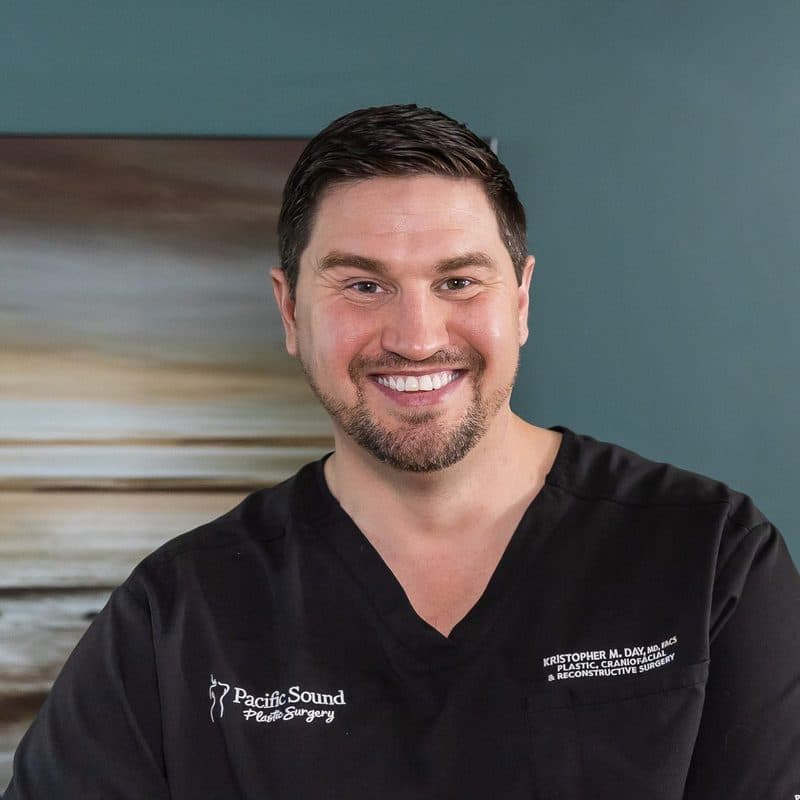
Dr. Kristopher Day is certified by the American Board of Plastic Surgery and the American Board of Surgery, fellowship-trained in craniofacial surgery, and a member of the American Society of Maxillofacial Surgeons.
Meet Dr. DayBlepharoplasty
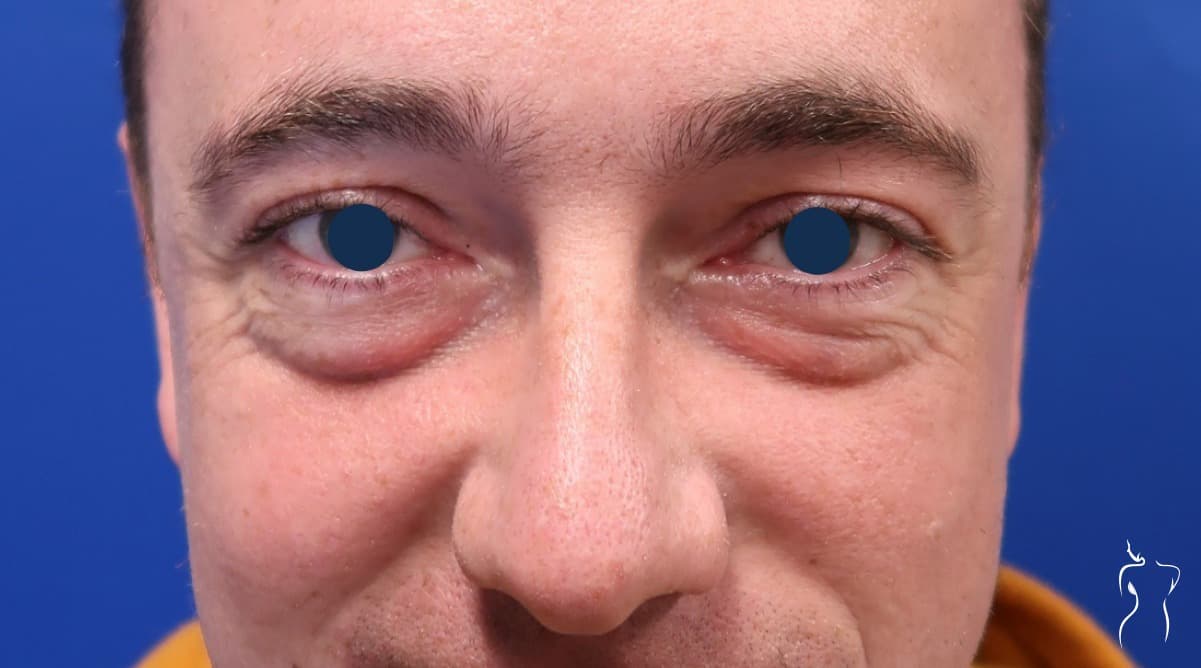
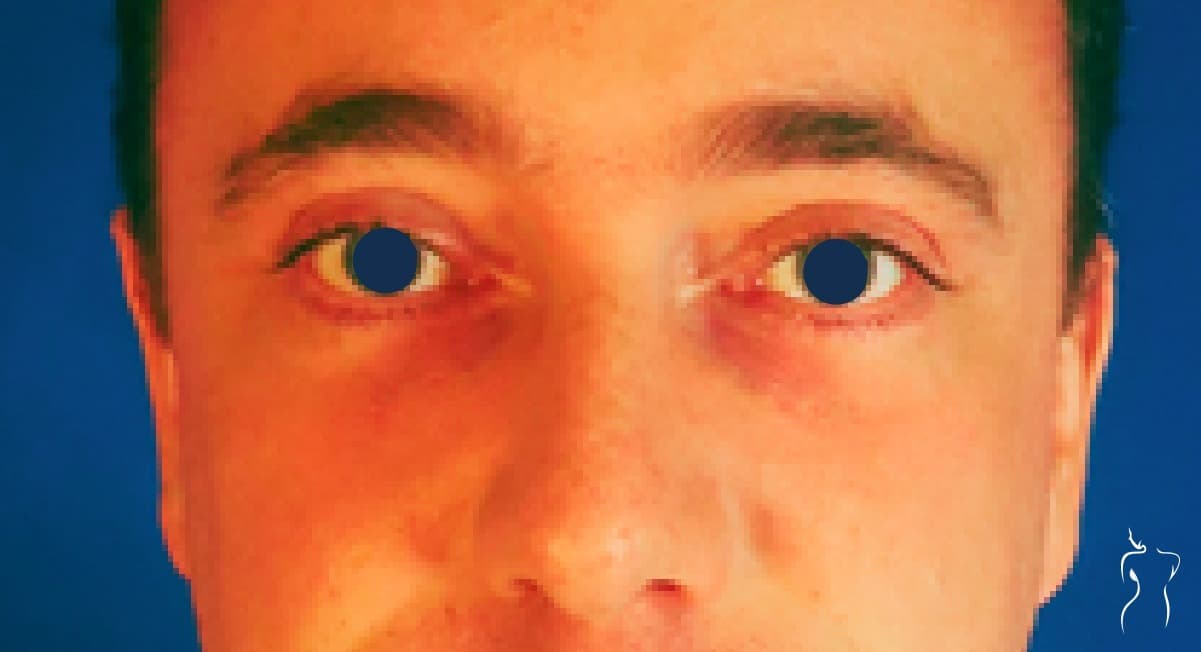
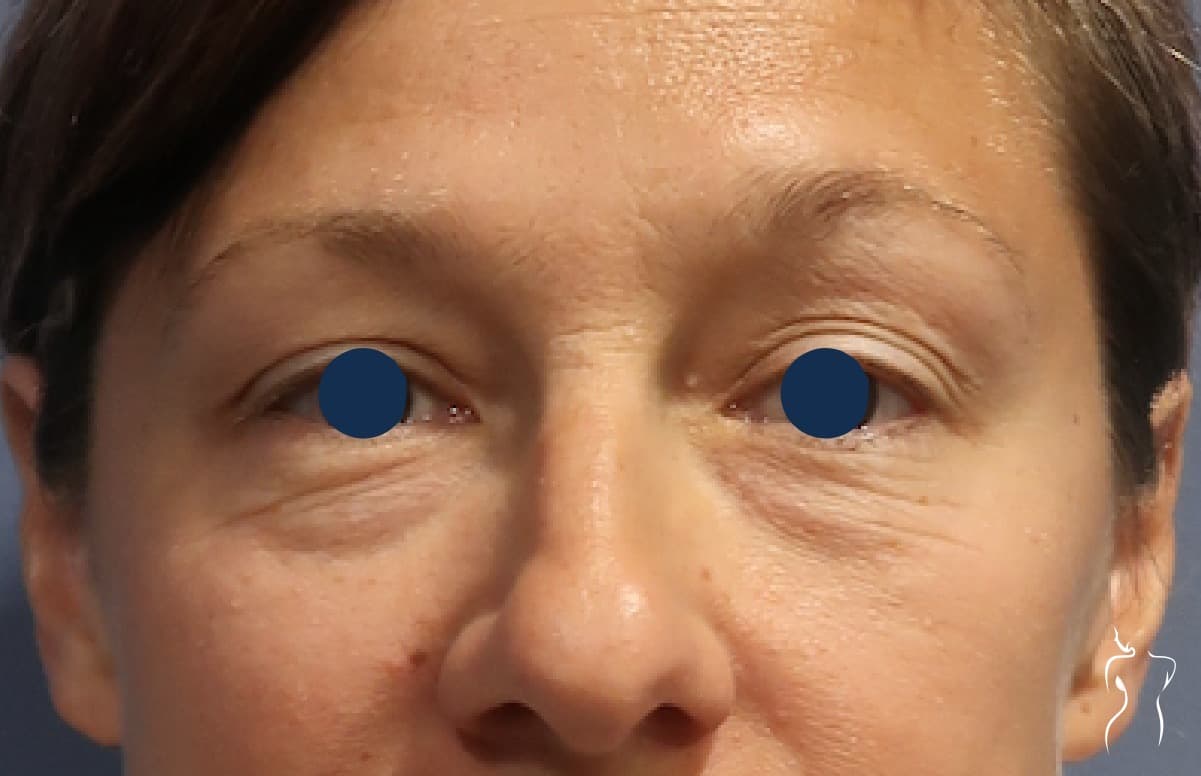
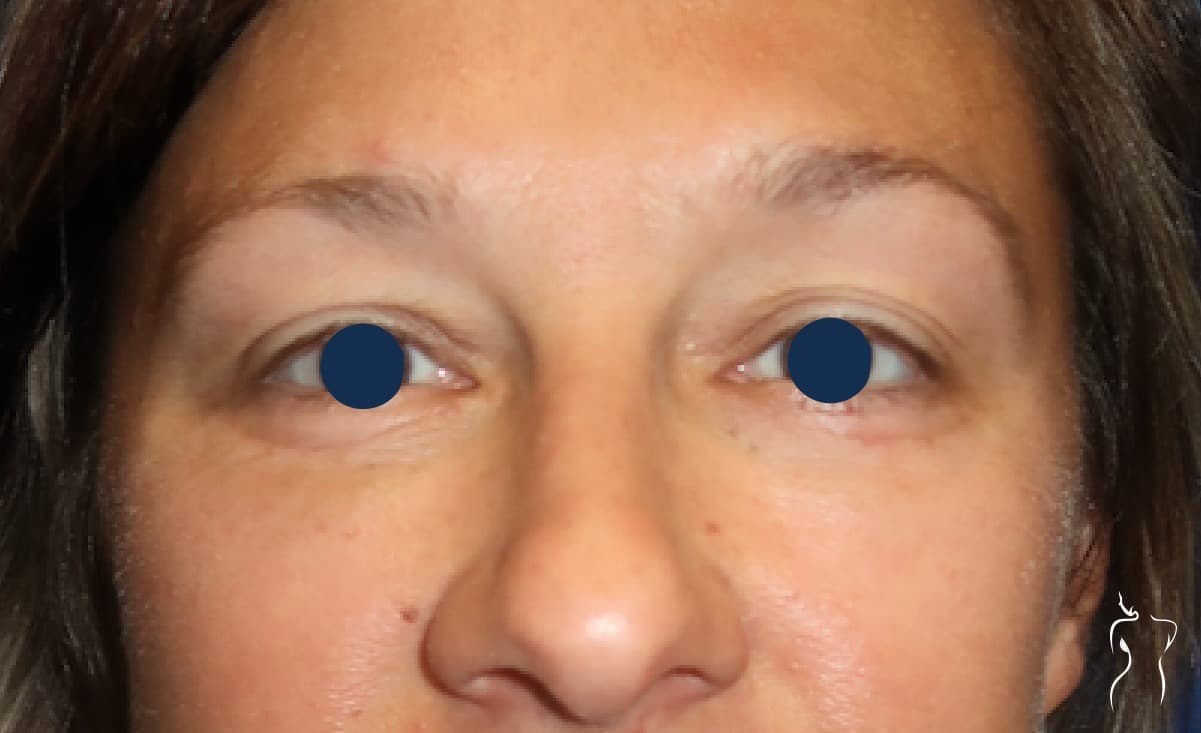
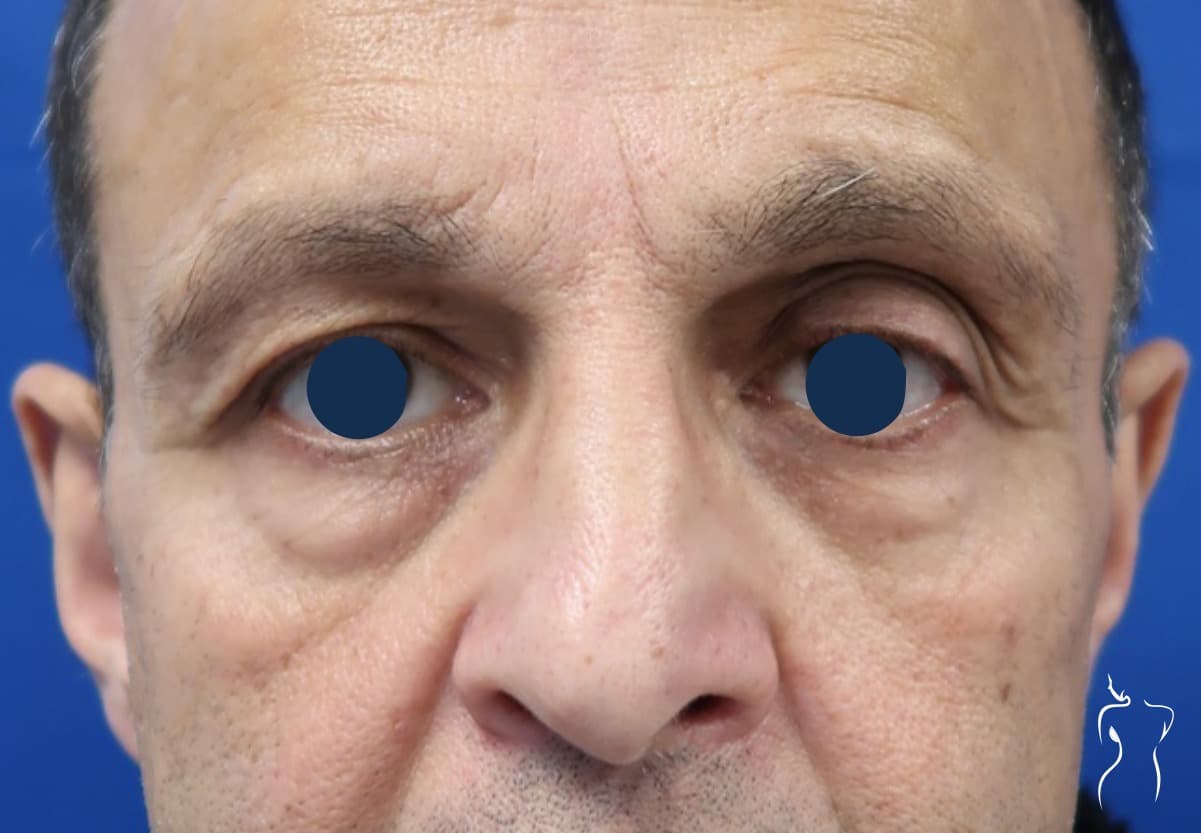
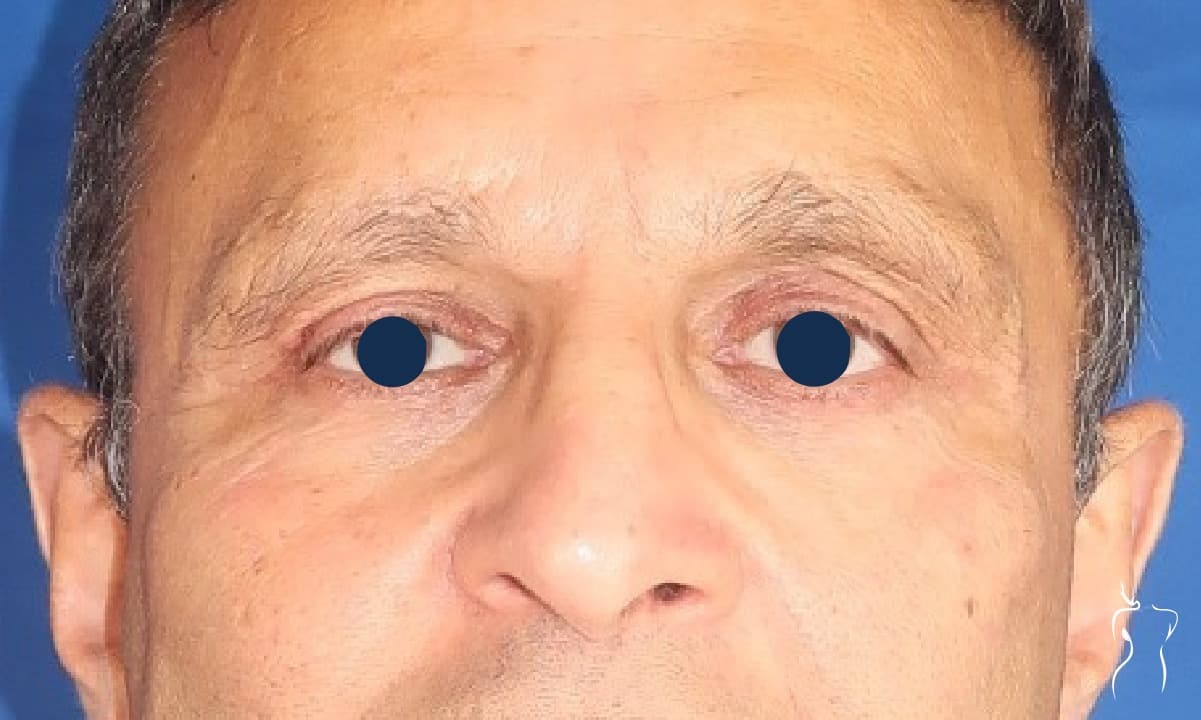
Results vary from person to person. The right comparison starts with your anatomy and your goals, in consultation.
See results like these in person. Plan a consultation with Dr. Day.
The operation
Every consultation — and every operation — is with Dr. Day.
Upper blepharoplasty removes excess skin and, where needed, a measured portion of fat through an incision hidden in the lid crease. Lower blepharoplasty takes one of two routes: transconjunctival, through the inside of the lid with no external scar, for patients with good skin tone; or a subtarsal external approach when skin laxity itself needs treating.
Surgery is outpatient, under either local anesthesia with sedation or general anesthesia depending on scope and your comfort. Upper lids take roughly forty-five minutes to an hour; lower lids an hour to ninety minutes; both together two to three hours. You go home the same day.
Scope limits are stated plainly: eyelid surgery does not lift a heavy brow, and it does not change pigment-based dark circles. Where the brow is the real culprit, that conversation happens first — and when brow descent is part of the picture, treating both areas in one session usually gives the more balanced result and one recovery instead of two.
Four approaches
Upper and lower lids are separate problems with separate operations. The exam decides which of these your anatomy calls for.
Upper blepharoplasty
Removes the hooding that weighs on the upper lid, through an incision set inside the natural crease. The most common eyelid operation, and the one insurance occasionally considers.
Lower — transconjunctival
Fat repositioned or removed through the inside of the lid, leaving no external incision at all. For patients whose lower-lid skin still has good tone.
Lower — subtarsal
An external approach just beneath the lash line, used when loose skin itself needs treating rather than fat alone.
Combined, or with a brow lift
Upper and lower together in one session, and where a descending brow is driving the heaviness, blepharoplasty planned alongside a brow lift so the two corrections agree.
Insurance, honestly navigated
Functional upper-lid coverage follows a defined path, and the documentation is yours and your primary-care provider's to obtain: notes documenting dermatochalasis, a taped visual-field test with an optometrist or ophthalmologist, and photographs, followed by a pre-authorization that runs four to six weeks. Coverage is uncommon, and most patients who pursue it ultimately do not qualify — you deserve that expectation up front.
One practical point that surprises people: this path starts before your consultation here, not after it. You cannot self-refer for insurance consideration — the referral and the visual-field documentation come from your primary-care provider and your eye doctor first. Beginning there saves you the disappointment of a plan built around coverage that was never going to materialize.
Lower blepharoplasty is virtually never covered, and in most circumstances is not even submittable for consideration. You deserve to know that before the paperwork starts.
Recovery
Expect real swelling and bruising in the first days, and do not judge anything by it — most of it lifts within five to seven days, and most patients are comfortable in public within seven to ten. The eyes may feel tight, dry, or light-sensitive early on. Blood thinners, aspirin, and anti-inflammatories pause beforehand as directed, and smoking stops six weeks around surgery.
As the swelling recedes the new lid shape emerges, with some firmness and minor asymmetry along the way — both normal while tissue settles. Incision lines look pink or slightly raised before they mature and fade.
The refined result emerges over three to six months, with quiet refinement continuing up to a year. Upper-lid incisions sit in the natural crease; lower-lid incisions, when external, sit just under the lash line. Revision is uncommon.
How the weeks before and after surgery fit together is covered in the practice's recovery guide.
Plan a consultation with Dr. Day.
Patient Voices
Individual results vary. Quotes are verbatim excerpts from reviews published by patients.
“He takes the time to understand your aspirations, vision, and goals, ensuring that your desired outcomes are at the forefront of his care.”
“Dr. Day's knowledge, compassion, and attention to detail made all the difference in my recovery process.”
“He took the time to listen to my concerns and desires, ensuring I had a clear understanding of the procedure, expected outcome and healing process. … I think he's a very skilled and precise surgeon.”
Questions, answered
The rest belong in a conversation. Consultations are unhurried by design.
Will insurance cover my eyelid surgery?
Occasionally, for the upper lids, when drooping skin measurably obstructs vision — but coverage is uncommon, and most patients who pursue it do not qualify. The documentation is obtained by you and your primary-care provider: dermatochalasis notes, a visual-field test, and photographs, followed by a four-to-six-week pre-authorization. Lower-lid surgery is virtually never covered.
Upper, lower, or both?
They are separate operations solving separate problems: heaviness above, fullness below. Many patients do both in one session; the exam tells you what your anatomy actually calls for.
What is the transconjunctival approach?
Lower-lid surgery performed through the inside of the eyelid, leaving no external scar. It suits patients whose concern is fat fullness with reasonable skin tone.
Do I need a brow lift instead?
Sometimes the heaviness you feel in the lids actually lives in the brow. The exam distinguishes them, and treating the true source is what keeps results natural.
Will people be able to tell?
Incisions hide in the lid crease or inside the lid. The intended read is rested, with the character of your eyes unchanged.
What are the risks?
Bruising, swelling, temporary dryness, and asymmetry are the common ones. Less common: infection, visible scarring, and ectropion, where the lower lid pulls downward. Vision loss is a recognized textbook risk of any eyelid procedure and is exceedingly rare. All of it is reviewed candidly at consultation alongside your health history, including how the technique is designed to minimize each.
Will there be visible scars?
Upper-lid incisions sit inside the natural crease, where they become difficult to find once mature. Lower-lid work done from the inside of the lid leaves no external incision at all; the external approach places its line just beneath the lashes. No scar is ever truly invisible, and the plan is to put every one where the eye already has a line.
How do I prepare?
Stop blood thinners, aspirin, and anti-inflammatories as directed; stop smoking at least six weeks before; arrange a driver and someone to stay with you the first day; and fill prescriptions in advance. You will get a complete pre-operative checklist at your appointment.
Can it be combined with other facial procedures?
Frequently — brow lift, facelift, laser resurfacing, and injectables are the common pairings. Combining avoids a second recovery when it makes sense, and the consultation covers whether simultaneous or staged serves you better.
How long do results last?
They are long-lasting: the structural change to the lid does not undo itself, though aging continues around it. Most patients never need revision.
How much does eyelid surgery cost?
Lower blepharoplasty starts from $6,500 and a combined upper-and-lower procedure from $9,500; qualifying functional upper-lid cases may be insured. Your consultation includes a written breakdown, with CareCredit and Alphaeon financing available.
Financing Options