Medical-Grade Skincare in Bellevue
Medical-grade skincare is the difference between products and a program: prescription-strength formulations, selected against your actual skin, adjusted as your skin responds.
The lines here are chosen for evidence — Obagi systems, prescription tretinoin, and Latisse — dispensed through the practice with medical oversight rather than off a retail shelf.
A regimen is also the quiet multiplier for everything else in this building: it prepares skin for peels, supports healing after surgery, and holds results that procedures create.




Your surgeon
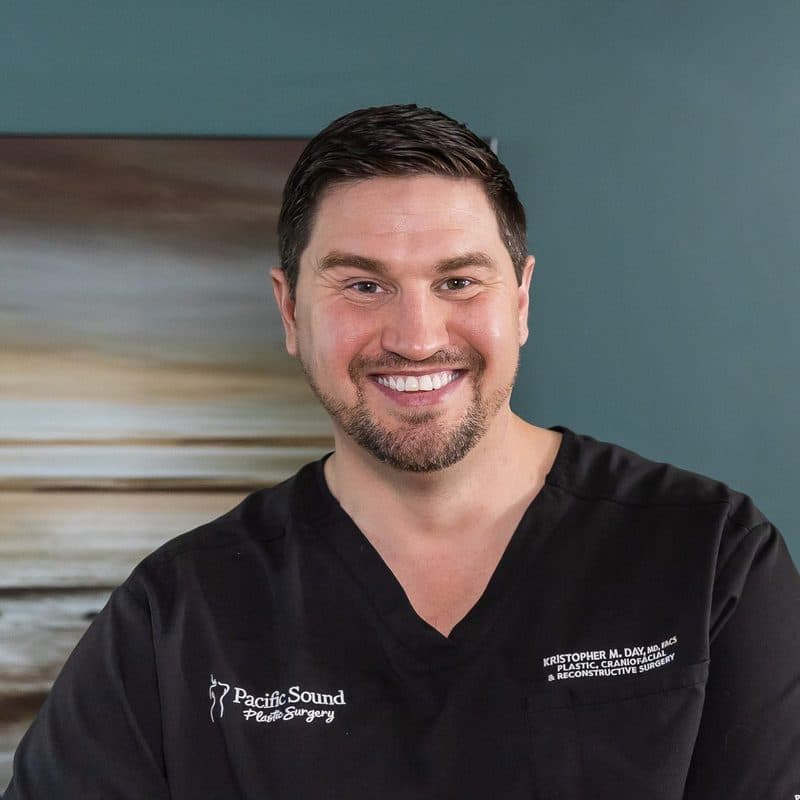
Dr. Kristopher Day is certified by the American Board of Plastic Surgery and the American Board of Surgery, fellowship-trained in craniofacial surgery, and a member of the American Society of Maxillofacial Surgeons.
Meet Dr. DayThe program
Non-surgical care in a plastic surgeon's practice.
It starts with an assessment: skin type, pigment, sun history, and what you want changed. From there a regimen is built — cleanser to sunscreen, with the prescription actives doing the heavy lifting — and adjusted at follow-up as your skin adapts.
The concentration and penetration of medical-grade actives are what over-the-counter products, by regulation, cannot match. Oversight is the trade: stronger tools, used correctly.
A regimen also does specific work around procedures. Two to four weeks of tretinoin conditioning before a chemical peel evens out how the skin sheds, which is what makes a peel heal predictably instead of blotchily. After surgery or resurfacing, the same regimen protects a result that took real effort to produce.
The lines
A short shelf, chosen for evidence.
Obagi Nu-Derm
The transformation system for tone, pigment, and sun damage, run as a supervised program.
Tretinoin
The most-studied prescription retinoid in dermatology — the workhorse of texture, lines, and cell turnover.
Blue Peel Radiance
Obagi's in-office peel, paired with the home regimen that sustains it.
SPF 50 Sunshield Matte
The least glamorous item on the shelf and the one that decides whether the rest of it holds.
Latisse
The FDA-approved prescription treatment for longer, fuller lashes.
Is it right for you
Anyone serious about their skin benefits from a real regimen — as a standalone program, as preparation for peels or microneedling, or as the maintenance layer after surgical rejuvenation.
Prescription retinoids pause during pregnancy and breastfeeding, and the assessment adapts the regimen honestly around your skin's sensitivities.
What to expect
Retinoid programs begin with an adjustment period — dryness and light flaking in the early weeks as the skin ramps its turnover. It passes, and it is managed with titration rather than abandoned.
Daily sunscreen is the non-negotiable companion. Visible change builds over weeks and compounds over months, which is why the follow-up visit is part of the program.
Patient Voices
Individual results vary. Quotes are verbatim excerpts from reviews published by patients.
“Dr. Day and his team provided expert individualized care from the initial consultation through post-op check ups.”
“He takes the time to understand your aspirations, vision, and goals, ensuring that your desired outcomes are at the forefront of his care.”
“Dr. Day's knowledge, compassion, and attention to detail made all the difference in my recovery process.”
Questions, answered
The rest belong in a conversation. Consultations are unhurried by design.
What makes medical-grade different from store-bought?
Concentration, penetration, and oversight. Prescription-strength actives like tretinoin simply do not exist over the counter, and the supervision that comes with them is what makes stronger tools safe and effective.
How do I start tretinoin without wrecking my skin?
Low and slow: a starting strength matched to your skin, a titration schedule, and moisturizer strategy for the adjustment weeks. That ramp is exactly what the supervised program provides.
Does Latisse actually work?
It is the FDA-approved prescription for inadequate lashes, with growth visible over about two months of nightly use. Results maintain with continued use.
Can I buy products without a consultation?
Products are dispensed through the practice with a skin assessment first — the point is a regimen that fits your skin, and the prescriptions require it. There is no online store, by design.
How does skincare fit around procedures?
It prepares the skin before peels and resurfacing, supports healing after surgery, and maintains what procedures achieve. Most treatment plans here end with a regimen for exactly that reason.
How far ahead should I start before a peel?
Two to four weeks. Tretinoin conditioning evens out how quickly the skin turns over, so the peel penetrates uniformly instead of patchily and heals faster afterward. Booking a peel without that runway is the most common reason a result comes out blotchy, which is why the regimen is treated as part of the peel rather than an add-on to it.
How long before I see a difference?
Weeks for the first signs, months for the change you were after. Retinoids work by accelerating turnover, and turnover takes the time it takes. That slow curve is precisely why the follow-up visit exists: the regimen gets adjusted against what your skin actually did, not against what it was predicted to do.
What does a regimen cost?
Most medical-grade products are about $100 each, and the regimen is built to your budget honestly — a focused three-product program done consistently beats an elaborate shelf used sometimes.