Laser Skin Resurfacing in Bellevue
The practice resurfaces with a fractional CO2 laser, the most established of the minimally invasive resurfacing tools. It treats the damage creams cannot reach: etched-in lines, sun damage, uneven pigment, and rough texture.
Fractional delivery is the key idea: the laser treats the skin in thousands of microscopic columns and leaves the tissue between them untouched, so healing starts from within the treated area itself rather than only from its edges. That untreated tissue is what keeps the recovery to days rather than weeks.
One deeper session can accomplish what a long series of lighter treatments approaches. The trade is explicit: a week of social downtime in exchange for change you can see.




Your surgeon
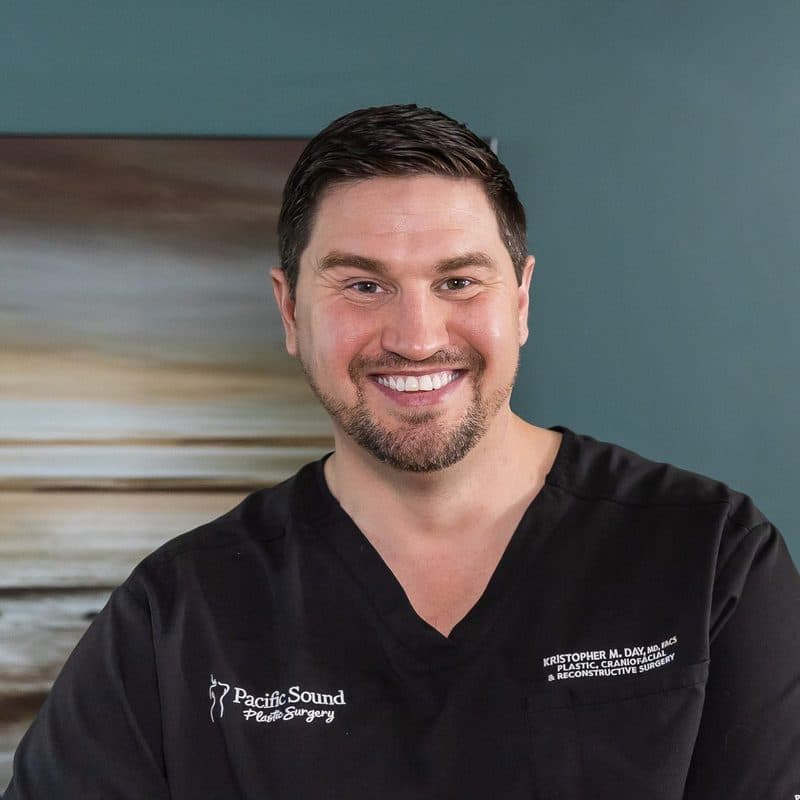
Dr. Kristopher Day is certified by the American Board of Plastic Surgery and the American Board of Surgery, fellowship-trained in craniofacial surgery, and a member of the American Society of Maxillofacial Surgeons.
Meet Dr. DayThe treatment
Non-surgical care in a plastic surgeon's practice.
After thorough topical numbing, the laser passes over the treatment zones with depth and density set to your skin and goals — lighter where the skin is thin, more assertive over etched lines and textured scarring. The face is the usual canvas; the neck, chest, and hands follow where sun damage calls for it.
Treatment depth is a physician-level decision made at your assessment, which is exactly why this device lives in a surgical practice rather than a salon.
Is it right for you
Resurfacing serves sun damage, fine and moderately etched lines, uneven pigment, rough texture, and acne scarring. It pairs naturally with facelift and eyelid surgery, treating the skin quality those operations do not address.
The distinction that prevents the common disappointment: resurfacing changes the quality of the skin, not its position. A laser will not lift a jowl or tighten a lax neck, and a face whose real complaint is descent will look like the same face with better skin. Knowing which of the two is bothering you is the whole consultation, and it is a question a surgical practice is well placed to answer.
Deeper skin tones, active skin conditions, and recent Accutane use change the plan or the tool — the assessment sorts candidacy honestly, and a peel or microneedling series is sometimes the better answer.
What to expect
The first several days feel and look like a strong sunburn, with pinpoint crusting as the treated columns heal — most patients keep a low profile for five to seven days. Redness fades over the following weeks as new collagen builds.
Strict sun protection is non-negotiable during healing and diligent afterward; the result continues to refine for three to six months as remodeling completes.
Patient Voices
Individual results vary. Quotes are verbatim excerpts from reviews published by patients.
“He took the time to listen to my concerns and desires, ensuring I had a clear understanding of the procedure, expected outcome and healing process. … I think he's a very skilled and precise surgeon.”
“I have always gotten the realistic results I hope for.”
“Dr. Day was so compassionately patient and really took the time. … After the surgery, Dr. Day was just as dedicated and regularly checked up with me throughout my healing process.”
Questions, answered
The rest belong in a conversation. Consultations are unhurried by design.
What laser does the practice use?
A fractional CO2 laser, the most established of the minimally invasive resurfacing tools. Depth and density are set per zone at a physician-directed assessment.
How is this different from a chemical peel or microneedling?
All three renew the surface by provoking repair. The laser reaches deepest per session and does its work in one or two visits; peels and microneedling build comparable direction over a series. Pigment concerns, downtime tolerance, and skin type decide the tool.
How much downtime should I plan for?
Five to seven days of social downtime while the skin heals openly, then makeup-friendly redness that fades over two to six weeks. Timing it against your calendar is part of the assessment.
Does it work on all skin tones?
CO2 resurfacing carries pigment risks on deeper skin tones, which is a candidacy conversation, not a footnote. Where the laser is not the right tool, the practice offers alternatives that are.
How much does laser resurfacing cost?
Pricing follows the depth and the areas treated and is quoted in writing at your skin assessment, before anything is scheduled. CareCredit and Alphaeon financing are available.
Can it be combined with surgery?
Yes — resurfacing is often sequenced with facelift or eyelid surgery, because lifting repositions tissue while the laser renews the skin itself. Dr. Day plans both sides of that equation.